携程
新加坡渣打银行:开启0门槛办理个人开户之门_我的网站

A |
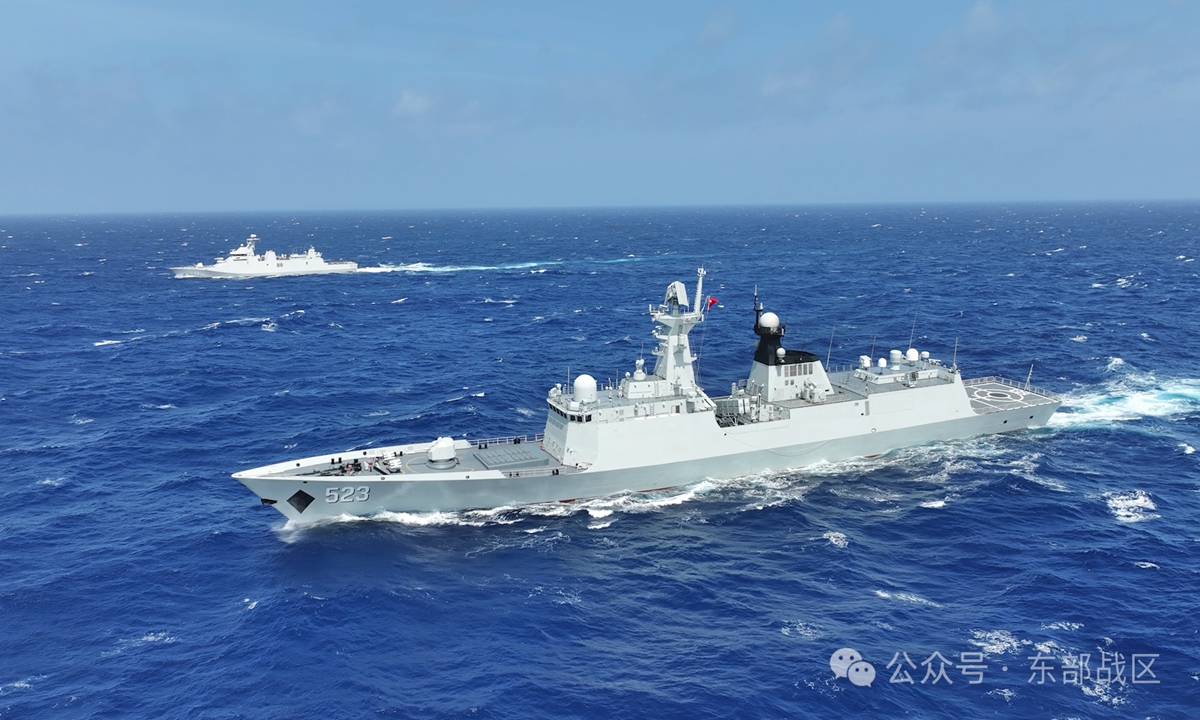
Chinese Navy's guided-missile frigate Honghe (Hull 523) and the Indonesian Navy frigate KRI I Gusti Ngurah Rai conduct a replenishment-at-sea exercise in waters east of China's Taiwan Island in August 2026. Photo: official WeChat account of the PLA Eastern Theater Command
Following China's Ministry of National Defense's announcement on Tuesday that the Chinese and Indonesian navies will hold a navigation exercise in waters east of Taiwan island in mid‑August, Democratic Progressive Party (DPP) authorities on the island fiercely opposed and smeared this legitimate maritime military cooperation, while hyping up the so‑called "China threat" narrative. Their provocative response stands in stark contrast to their weak, accommodating stance toward Japan and the Philippines, whose illegal maritime delimitation in waters east of Taiwan has undermined China's legitimate maritime rights and interests.
Analysts pointed out that such reactions lay bare the DPP's secessionist mentality, its reliance on external forces to back "Taiwan independence" schemes, and its deep‑seated fear of the mainland's growing military capabilities to safeguard national sovereignty and territorial integrity.
The Chinese Navy's Honghe
guided-missile frigate (Hull 523) and Indonesia's frigate KRI I Gusti Ngurah Rai completed all scheduled exercises in waters east of China's Taiwan island on Wednesday morning, concluding a joint maritime passage exercise, according to the PLA Eastern Theater Command. The two vessels conducted drills including maritime communications, formation maneuvering, replenishment at sea and a farewell ceremony, demonstrating practical cooperation and their shared commitment to regional peace and stability.
In a statement on Wednesday, the DPP authorities' "external affairs" department smeared the drill as a "malicious provocation, irresponsible unilateral act that brings unrest and threats to the region." It claimed that it would vigorously safeguard its so‑called "sovereignty" over the waters east of Taiwan island.
On Tuesday evening, the so-called Mainland Affairs Council on the island also smeared the exercises as an act "undermining regional peace and stability and challenging the international order," claiming that the exercises had seriously infringed upon its so‑called "national sovereignty" and maritime rights and interests.
Some media outlets have noted that choosing waters east of Taiwan island for the drill may relate to the Japan‑Philippines maritime delimitation issue. Observers meanwhile highlighted a stark contrast between the DPP authorities' willingness to endorse Japan and the Philippines' illegal maritime‑delimitation moves in waters east of Taiwan and their fiery rhetoric over the legitimate maritime drill between the Chinese mainland and Indonesia.
Some Taiwan‑based netizens also condemned the DPP's conduct. One user wrote beneath a Mainland Affairs Council Facebook post: "They would rather act as vassals to foreign states than let compatriots defend our maritime territory - the DPP are traitors to the nation."
"The Taiwan authorities simply have no so‑called 'national sovereignty.' Such remarks reflect the DPP authorities' secessionist ideology," said Wang Jianmin, a senior cross-Straits expert at Minnan Normal University in Fujian. He noted the stark contrast in the DPP authorities' positions also shows that they have never cared about genuine maritime rights and interests.
According to Wang, on one hand, the DPP authorities pin their hopes on external forces to back their Taiwan secession schemes and choose to compromise and yield on actual maritime interests. On the other hand, they deliberately fabricate the narrative of "the Chinese mainland unilaterally changing the status quo," in a bid to garner more attention and support for external forces.
In addition, as local elections on the island draw near, the DPP authorities seek to hype up the so‑called "military threat from the mainland" rhetoric, stoke anti‑mainland sentiment on the island and shift blame for various livelihood‑related social problems against the DPP, Wang noted.
Since June this year, China Coast Guard (CCG) vessels have conducted regular law-enforcement patrols in waters east of Taiwan island, with the aim of exercising jurisdiction in accordance with the law and safeguarding China's territorial sovereignty and maritime rights and interests. The patrol came in response to Japan-Philippines' unilateral announcement of so-called "maritime delimitation negotiations" concerning waters east of Taiwan island in May, according to CCG's statement.
Previously, the PLA Eastern Theater Command conducted joint exercises codenamed "Justice Mission 2025" in the Taiwan Straits and in waters to the north, southwest, southeast, and east of the island.
For a long time, secessionists have clung to the illusion that the waters east of Taiwan island serve as a "security buffer zone," from which outside forces could intervene in the Taiwan Straits from this direction, said Wang.
"However, the China-Indonesia naval drill in the waters east of Taiwan island further shatters secessionists' illusions," Wang said. "It demonstrates China's firm stance in safeguarding national sovereignty and territorial integrity, and constitutes a stern warning to secessionists and external forces."
According to the expert, the reaction of the DPP authorities also lays bare the deep‑seated fear harbored by secessionists.
"They are acutely mindful of the real possibility that the Chinese mainland may impose maritime containment around Taiwan island when necessary… Confronted with this scenario, the DPP authorities resort to nothing but loud rhetoric and empty posturing, which fully exposes the true nature of Taiwan secessionists: feigning ferocity while being fundamentally feeble and helpless," Wang said.
。 新加坡,这个亚洲金融中心的繁华与魅力,吸引了全球的目光。而在这个充满活力的城市中,渣打银行以其独特的优势,成为了众多投资者和企业家的一致选择。新加坡渣打银行,一家拥有160年历史的国际银行,始终秉持着“无门槛开户”的理念,致力于为全球客户提供优质、便捷的金融服务。
新加坡银行个人账户适合以下几类人群:1. 有跨境贸易、跨境投资和资金流动需求的商业人士;2. 经常境外或全球生活、工作、学习的旅居人士;3. 想要进行资产规划,保障资金安全的人士;4. 有移民计划,需要进行跨境投资转款的移民人士。

B | 新加坡渣打银行的优势体现在多个方面。首先,它为客户直接开设理财账户,而且账户管理费全免,无论是本地转账还是其他国家渣打银行的互转,均无需支付任何费用。此外,网银转账限额高达20万新币/天为,客户的资金流动提供了极大的便利。更值得一提的是,新加坡渣打银行的开户门槛极低。客户无需存款要求,无需签证,无需在新上班有工作,只需通过线上视频见证,即可成功开户。而且,成功开户后,客户将获得两种万事达卡——一账理财卡和一张美元消费卡,满足了不同货币的需求。

C | 新加坡渣打银行不仅支持新元和美元,还支持港币、欧元、英镑等多种货币,为客户提供了更为广阔的投资空间。

D | 此外,该银行的汇率优势明显,其汇率水平在整个行业中处于领先地位,理财收益也相对较高。那么,如何在新加坡渣打银行成功开户呢?首先,客户需要准备基本身份证、护照、收入证明和kyc表格等材料。

E | 然后,通过客户经理指定的新加坡律师进行视频见证开户,签署开户文件。这些文件均为英文,但无需担心,律师会指导客户如何填写。见证费用一般为500元,也有800元或1000元的,具体费用取决于律所的位置。接下来客户,需将视频中所签署的开户文件邮寄给见证律师,律师审核无误后签字盖章,再寄回新加坡客户经理处进行最后的审核。一旦审核通过,个人账户将在1-2天内完成开户。此时,客户会收到一封邮件,按照邮件提示开通网银,即可正常使用该账户。银行卡一般需要1到2周的时间才能收到。总之,新加坡渣打银行以其无门槛开户的优势,为全球客户提供了便捷、高效的金融服务。在新加坡这个金融枢纽中,渣打银行以其独特的魅力,赢得了广泛的信任和赞誉。无论您是投资者、企业家,还是普通客户,渣新加坡银行打都将为您开启理财之门,助您实现财富的增值。
Current article:http://7m2oy.kenouguanruilianshanxiangshu.cfd/7ou1/20260826/56402.html
Published on:14:04:54
